Rewriting sentences about historical events sounds simple until you sit down and try it. You know the facts the Treaty of Westphalia ended the Thirty Years' War in 1648 but finding a fresh way to say it without losing accuracy? That's a different skill entirely. Interactive tools for practicing historical event sentence rewording give you a hands-on way to build that skill, letting you test different phrasings in real time and learn from instant feedback. For students, educators, and writers who work with historical content regularly, these tools bridge the gap between knowing the material and expressing it clearly in your own words.
What does historical event sentence rewording actually involve?
Sentence rewording sometimes called paraphrasing means restating an idea using different words and sentence structures while keeping the original meaning intact. When the topic is a historical event, the stakes are higher. You can't swap in synonyms carelessly. Changing "assassination" to "attack" might blur the significance of an event. Rewording a sentence about the fall of the Berlin Wall requires understanding what happened, why it mattered, and which details are essential versus optional.
Interactive tools make this process more than a guessing game. Instead of staring at a sentence and hoping your rewrite is accurate, you get prompts, feedback, and structured exercises that guide you through the work. If you're also interested in varying how you describe scientific breakthroughs, our guide on how to vary sentences describing historical scientific events covers similar techniques applied to science writing.
Why would someone need a tool to practice this?
There are several situations where rewording historical sentences comes up more often than you'd think:
- Academic writing. Students paraphrase historical events in essays, research papers, and exams. Doing this well shows comprehension not just memorization.
- Content creation. Bloggers, educators, and documentary writers describe the same events across multiple pieces. Repetitive phrasing makes content dull and can trigger plagiarism concerns.
- Teaching and tutoring. History teachers use sentence rewording exercises to check whether students actually understand what they're studying.
- ESL and language learning. Learners practicing English often work with historical texts to improve vocabulary and grammar while building subject knowledge.
In each case, the goal isn't just to swap words around. It's to develop a deeper understanding of how language works when precision matters.
How do interactive tools help you practice rewording?
Unlike static worksheets or textbooks, interactive tools respond to what you type. Here's what that typically looks like:
Side-by-side comparison
You see the original sentence next to your rewrite. The tool highlights words or structures that differ, so you can spot whether you've changed enough or too much. For example:
- Original: "The French Revolution began in 1789 with the storming of the Bastille."
- Rewrite: "In 1789, citizens stormed the Bastille, marking the start of the French Revolution."
A good tool would flag that your rewrite preserves the key facts (1789, Bastille, beginning of the revolution) while noting the structural change from passive to active framing.
Prompt-based exercises
Some tools give you a historical sentence and ask you to reword it with a specific constraint use a different sentence structure, shorten it, or expand it. These constraints force you to think beyond surface-level synonym swaps. If you want to see concrete examples of how rephrased sentences look across different events, check out our examples of rephrased sentences for major scientific discoveries.
Scoring and feedback
More advanced platforms score your rewrite on criteria like accuracy, fluency, and originality. This kind of feedback matters because a sentence can sound smooth but lose a critical detail or preserve every fact but read awkwardly.
Suggestion modes
Some tools offer a "hint" or "suggest" button that generates a sample rewrite. You can compare your version with the suggested one, study the differences, and learn new techniques. This works especially well for learners who aren't sure where to start.
What are common mistakes when rewording historical sentences?
Even with tools, certain pitfalls come up repeatedly:
- Changing the meaning by accident. Swapping "treaty" for "agreement" works in casual conversation, but in historical writing, a treaty and an agreement carry different legal and political weight. Small word choices can shift the entire meaning of a sentence about events like the Magna Carta or the Treaty of Versailles.
- Over-relying on synonym replacement. Simply replacing each word with a synonym usually produces awkward, clunky sentences. Real rewording requires restructuring the sentence, not just swapping parts.
- Losing key context. A sentence about the Industrial Revolution might mention specific decades, locations, or causes. Omitting these in a rewrite even unintentionally changes the historical accuracy.
- Producing sentences that are too vague. "Something happened that changed everything" technically describes almost any major event, but it says nothing meaningful. Rewrites need to stay specific.
- Ignoring tone and register. Historical writing tends to be formal and precise. A rewrite that sounds too casual can undermine credibility, especially in academic or educational contexts.
What should you look for in a good interactive rewording tool?
Not all tools are built the same. Here's what separates useful ones from the rest:
- Subject-specific content. A tool that focuses on historical events rather than generic sentence rewriting provides better context and more relevant exercises.
- Instant, specific feedback. Vague feedback like "good job" doesn't help you improve. Look for tools that point out exactly what changed, what's missing, and what works well.
- Multiple difficulty levels. Simple historical sentences (dates, names, events) are good starting points. More complex ones (causes, consequences, debates) challenge advanced users.
- No account wall for basic features. You should be able to try a few exercises before signing up or paying. If a tool hides everything behind a login, it's hard to know whether it suits your needs.
- Clean interface. Distraction-free design helps you focus on the sentence itself, not on navigating menus or closing pop-ups.
For a focused resource that combines these features with historical content, our interactive tools for practicing historical event sentence rewording page walks through specific platforms and exercises worth trying.
How can you get better at rewording without a tool?
Tools speed up the process, but you can also build this skill with simple, repeatable practices:
- Read the original sentence three times, then cover it and write your version from memory. This forces you to work from understanding, not from copying.
- Ask yourself: what are the two or three non-negotiable facts in this sentence? If your rewrite preserves those, you're on solid ground.
- Practice changing sentence structure, not just vocabulary. Turn a compound sentence into two simple ones. Move the time reference from the end to the beginning. These structural shifts matter more than word swaps.
- Compare your rewrite with a trusted source's description of the same event. Encyclopedias, textbooks, and museum websites often describe events in ways that differ from one another studying those differences teaches you how professionals reword the same facts.
- Keep a list of historical terms that have precise meanings. Words like "revolution," "reform," "armistice," "annexation," and "abdication" aren't interchangeable. Knowing the distinctions protects your accuracy. According to Merriam-Webster, even closely related terms carry different connotations that matter in formal historical writing.
Quick checklist: rewording a historical sentence well
- ✅ Identify the 2–3 essential facts that must stay intact
- ✅ Restructure the sentence don't just replace individual words
- ✅ Check that your word choices carry the right historical weight
- ✅ Keep the tone appropriate (formal for academic writing, accessible for general content)
- ✅ Read your rewrite out loud to catch awkward phrasing
- ✅ Compare it against the original one final time for accuracy
Start with one historical sentence today. Pick an event you know well the signing of the Declaration of Independence, the invention of the printing press, the end of apartheid and write three different versions of the same sentence. Focus on changing structure, not just vocabulary. That single exercise will teach you more about rewording than reading a dozen articles about it.
 How to Vary Sentence Structure When Describing Historical Scientific Discoveries
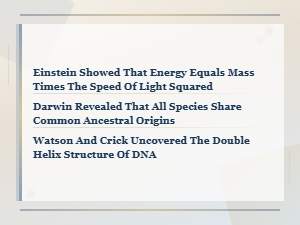 Examples of Rephrased Sentences for Major Scientific Discoveries
 Educational Resources for Teaching Sentence Variation in Science History
 Advanced Paraphrasing Techniques for Scientific Breakthrough Narratives
 Rephrasing War and Conflict Sentences for Academic Essays
 Alternative Phrases for "war Broke Out" in Academic History Writing