Writing about history's greatest scientific discoveries should feel exciting. But when every sentence starts the same way "Newton discovered..." or "Einstein proved..." your writing turns flat fast. Learning how to vary sentences describing historical scientific events keeps your readers engaged, strengthens your credibility, and helps you avoid sounding like a textbook summary. Whether you're a student writing a paper, a teacher building lesson materials, or a content creator explaining science history, sentence variety is a skill that directly improves how your work reads.
What does it mean to vary sentences about scientific events?
Sentence variation means changing the way you structure and present information so that your writing doesn't feel repetitive. When you describe historical scientific events like Marie Curie's discovery of radium or Galileo's observations of Jupiter's moons you need to find different ways to frame the same core facts.
This includes switching up:
- Sentence length mixing short, punchy sentences with longer, detailed ones
- Sentence openings starting with dates, names, actions, or context instead of always leading with the scientist's name
- Voice alternating between active and passive constructions
- Point of view and focus sometimes centering the discovery, sometimes the discoverer, sometimes the impact
The goal isn't to sound clever. It's to make your writing clear and readable without boring your audience.
Why does sentence variety matter when writing about science history?
Repetitive sentence patterns create two problems. First, they make your writing feel mechanical. Readers disengage when every paragraph follows the same rhythm. Second, they limit how well you communicate the significance of what happened. A breakthrough like the discovery of penicillin carried drama, accident, and global consequence. Flat sentence structures drain all of that out.
Teachers and editors notice when writing lacks variety. According to Purdue's Online Writing Lab, varying sentence structure is one of the most effective ways to improve readability and hold a reader's attention. This applies directly to writing about historical scientific discoveries, where the subject matter is rich but the phrasing can easily become formulaic.
What are some practical examples of sentence variation?
Let's take a real event Alexander Fleming's discovery of penicillin in 1928 and show how you can describe it in several different ways:
- Standard version: Fleming discovered penicillin in 1928 when he noticed that a mold had killed bacteria in a petri dish.
- Date-first version: In 1928, a contaminated petri dish in Fleming's lab led to one of medicine's most important breakthroughs.
- Impact-focused version: Penicillin would go on to save millions of lives, but its discovery began with a simple accident in a London laboratory.
- Passive construction: The antibacterial properties of the Penicillium mold were first observed by Fleming during a routine experiment.
- Question-led version: What happens when a scientist doesn't throw away a contaminated sample? For Fleming, the answer changed modern medicine.
Each version communicates the same core facts. But they read very differently. Using a mix of these approaches across your writing keeps things fresh. You can explore more rewriting methods with advanced paraphrasing techniques for scientific breakthrough narratives.
How do you shift sentence focus without changing the facts?
One useful technique is to change what the subject of your sentence is. Instead of always making the scientist the subject, try making the discovery, the method, or the historical context the subject:
- Scientist as subject: Darwin spent over twenty years developing his theory of natural selection.
- Theory as subject: The theory of natural selection took Darwin over twenty years to develop and publish.
- Time period as subject: Two decades passed before Darwin felt ready to publish his theory of natural selection.
This technique is simple, but it produces noticeably different sentences from the same information.
What mistakes do writers make when describing scientific events?
A few common patterns tend to weaken writing about historical science:
- Starting every sentence with a name. "Darwin proposed... Darwin traveled... Darwin published..." This creates a monotonous, list-like rhythm.
- Using the same verb over and over. "Discovered," "found," and "proved" appear in almost every sentence. Synonyms like "demonstrated," "revealed," "established," and "identified" add variety.
- Ignoring the human element. Scientists faced doubt, made mistakes, and sometimes got lucky. Leaving this out makes your writing feel dry and detached.
- Overusing passive voice. A single passive sentence adds variety. Five in a row makes your writing feel evasive and slow.
- Cramming too many facts into one sentence. Long, overloaded sentences lose readers. Break complex events into two or three shorter statements.
Recognizing these habits is the first step to fixing them. If you want structured exercises to break these patterns, interactive tools for practicing sentence rewording can help you build better habits through repetition.
How can you rewrite the same scientific event multiple ways?
This is where deliberate practice matters. Pick one historical event say, Watson and Crick's 1953 description of DNA's double helix structure and write it five different ways. Focus on changing one variable each time:
- Change the opening word or phrase
- Switch from active to passive voice (or vice versa)
- Shift the focus from the scientists to the discovery itself
- Add a cause-and-effect frame
- Start with a contrast or unexpected detail
After you write five versions, read them aloud. You'll hear which ones flow naturally and which feel forced. This kind of rewriting isn't just an exercise it mirrors what professional science writers and educators actually do when crafting clear explanations of scientific breakthroughs.
What role do transition words and connectors play?
Transitions help your varied sentences connect into coherent paragraphs. Without them, even well-structured individual sentences can feel disconnected. Useful connectors for science history writing include:
- Time-based: "By the mid-1800s," "Within a decade," "Centuries later"
- Cause and effect: "As a result," "This prompted," "In response"
- Contrast: "Despite initial skepticism," "Unlike his predecessors," "Although the data was limited"
- Emphasis: "More importantly," "What made this unusual," "The real significance lay in"
These phrases give your writing direction and help readers follow the logic of how one event led to another.
Where can you practice these skills?
Reading well-written science history is one of the best ways to internalize sentence variety. Books like The Double Helix by James Watson or A Short History of Nearly Everything by Bill Bryson demonstrate strong sentence variation throughout. Pay attention to how these authors open paragraphs, shift between description and narration, and balance detail with pace.
Beyond reading, hands-on practice helps. You can work through structured methods for varying scientific event sentences to develop your technique with specific, repeatable strategies rather than guessing.
Should you use tools or do it manually?
Both have value. Manual rewriting builds your instinct for good sentence structure. Tools can speed up the process and show you options you wouldn't have considered. The key is not to rely on any single tool to do the thinking for you. Use tools to generate ideas, then edit by hand to make sure the result sounds natural and accurate.
For a deeper look at how different approaches compare, the UNC Writing Center's advice on word choice offers practical guidance that applies directly to science writing.
Quick checklist for varying your scientific event sentences
- Read through your draft and highlight every sentence that starts with a person's name
- Rewrite at least half of those highlighted sentences with a different opening
- Replace repeated verbs like "discovered" or "found" with at least three alternatives
- Check that you have a mix of short (under 15 words) and longer sentences
- Include at least one sentence that focuses on the impact or consequence of the event
- Use at least two different transition types across your paragraphs
- Read your draft aloud and mark any spots where the rhythm feels repetitive
- Verify that passive voice appears no more than two or three times in the full piece
Next step: Pick one scientific event you've written about before even a short paragraph and rewrite it three times using the techniques above. Compare the versions. You'll notice the difference immediately, and that awareness is what drives real improvement in your scientific writing.
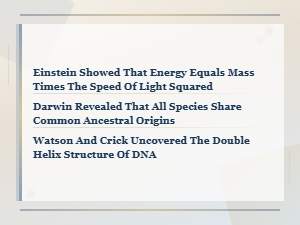 Examples of Rephrased Sentences for Major Scientific Discoveries
 Educational Resources for Teaching Sentence Variation in Science History
 Interactive Tools for Historical Event Sentence Rewording: Scientific Discovery Variations
 Advanced Paraphrasing Techniques for Scientific Breakthrough Narratives
 Rephrasing War and Conflict Sentences for Academic Essays
 Alternative Phrases for "war Broke Out" in Academic History Writing