Teaching students to describe scientific breakthroughs using only one sentence structure is like giving them a toolbox with a single wrench. They can tighten a bolt, but they can't build anything interesting. When students learn sentence variation in science history, they move beyond flat recitations of facts and start writing with rhythm, clarity, and purpose. This skill matters because the way we frame a discovery shapes how well others understand it and whether they care.
If you teach science writing, history, or literacy across the curriculum, this article walks you through what sentence variation means in the context of science history, why it helps students think and communicate more clearly, and which resources actually work in a classroom setting.
What does sentence variation mean when teaching science history?
Sentence variation is the practice of mixing different sentence lengths, structures, and openings so writing feels natural and keeps a reader engaged. In science history, this means helping students describe events like the discovery of penicillin or the structure of DNA using a range of sentence types simple, compound, complex, and compound-complex rather than defaulting to "Scientist X discovered Y in year Z" over and over.
When students practice this skill through historical science content, they learn two things at once: the facts of a discovery and how to communicate those facts with precision. You can see how to vary sentences when describing historical scientific events to understand the structural techniques involved.
Why use science history specifically to teach sentence variation?
Science history provides a built-in narrative. There is a problem, a process, and a result. That narrative structure gives students something meaningful to organize, which makes sentence variation feel purposeful rather than like an abstract grammar exercise.
Consider these advantages of using science history as the vehicle:
- Authentic context. Students practice writing about real events with real stakes, not invented prompts.
- Cross-curricular learning. Sentence work reinforces science content knowledge at the same time.
- Built-in variety of content. Every scientific discovery has a different story, so students can't just copy one formula and repeat it.
- Engagement with primary sources. Historical accounts from scientists like Marie Curie or Charles Darwin already model varied sentence structures that students can study and imitate.
A study published by the National Council of Teachers of English found that writing instruction anchored in content-area material improved both writing quality and subject retention. Science history sits at that intersection naturally.
What kinds of educational resources work best for this topic?
Not every resource that mentions "sentence variety" or "science history" will serve your classroom well. The most effective materials share a few traits: they connect grammar instruction to real content, they give students models to study before they write independently, and they offer structured practice that builds over time.
Model sentence sets from real discoveries
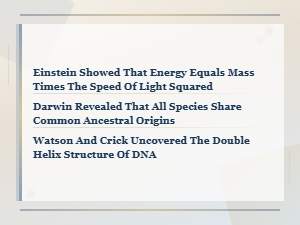
The single most useful resource is a set of model sentences showing the same scientific event written in multiple ways. For example, a set might show five different ways to describe Galileo's observations of Jupiter's moons each using a different sentence structure. Students can analyze what changes between versions and why. You can find examples of rephrased sentences for major scientific discoveries that demonstrate this approach in practice.
Sentence combining and expanding exercises
These exercises give students short, choppy facts and ask them to combine or expand those facts into longer, more varied sentences. For instance:
- Base facts: "Alexander Fleming noticed mold on a petri dish. The mold killed bacteria. This happened in 1928."
- Student task: Combine these into two or three sentences of different lengths and structures.
This type of exercise is supported by decades of writing research. George Hillocks Jr.'s work on sentence combining showed measurable improvements in syntactic maturity when students practiced this skill regularly.
Sentence imitation activities
Imitation sometimes called sentence modeling or mentor sentence work asks students to take a well-crafted sentence and replicate its structure using different content. A teacher might provide this sentence about Darwin:
"After years of careful observation across multiple continents, Darwin proposed a theory that would reshape how biologists understood the diversity of life."
Students then write a sentence about Marie Curie, Albert Einstein, or Rosalind Franklin using the same structural pattern. This technique builds an internal library of sentence forms that students can draw on later.
Paragraph revision workshops
Give students a flat paragraph written entirely in simple subject-verb-object sentences about a scientific event. Ask them to revise it for variety. This teaches editing skills alongside sentence variation and shows students that revision is where real writing improvement happens.
Curated reading passages from science history
Passages from books like The Double Helix by James Watson or Silent Spring by Rachel Carson show professional writers using varied sentences to describe science. Excerpts from these works serve as mentor texts. Assign students to identify sentence types, mark where the author shifts structure, and discuss why those shifts work.
When should teachers introduce sentence variation in science writing?
Students need some foundation in basic sentence structure before they can vary it intentionally. Most teachers find success introducing sentence variation work after students can identify simple, compound, and complex sentences. For many classrooms, this lands somewhere in upper elementary through middle school, though high school and even college-level science writing courses benefit from revisiting this skill.
A practical timeline might look like this:
- Week 1–2: Teach or review sentence types using examples from science history.
- Week 3–4: Assign sentence combining and imitation exercises tied to a specific scientific topic.
- Week 5–6: Have students write short paragraphs describing a scientific event, then revise for variety.
- Ongoing: Use mentor sentences from historical science texts in regular warm-ups or bell-ringers.
What common mistakes do teachers and students make?
Focusing on grammar labels instead of writing quality
Students don't need to recite the definition of a compound-complex sentence. They need to write one that sounds good and communicates clearly. Overemphasizing terminology can make the work feel disconnected from actual writing. Label sentences when it helps analysis, but keep the focus on how variety improves communication.
Using science topics that are too simple or too complex
If the science content is too basic, there's nothing for students to organize the sentences practically write themselves. If it's too advanced, students spend all their energy on content comprehension and none on sentence craft. Pick discoveries that are rich enough to support varied writing but accessible enough that students understand what happened. Topics like the invention of the telescope, the discovery of X-rays, or the development of vaccines tend to work well.
Skipping the modeling phase
Asking students to "write using varied sentences" without showing them what that looks like leads to frustration. Always provide models first. Show students multiple versions of the same idea written with different structures. Let them study those models before attempting their own writing.
Assigning variation once and moving on
Sentence variation is a skill that improves with repeated practice across different contexts. A single lesson won't produce lasting change. Build it into regular writing routines so students get comfortable shifting between sentence types as a natural part of how they write about science.
How do you assess sentence variation in student writing?
Rubrics for sentence variation should measure both range and effectiveness. It's not enough to count different sentence types students should be choosing structures that fit their meaning.
A simple assessment framework might include these criteria:
- Does the paragraph contain at least three different sentence structures?
- Do sentence lengths vary, or are they all roughly the same?
- Does the opening of each sentence differ from the one before it?
- Do the chosen structures support the meaning, or do they feel forced?
The last point matters most. A student who writes one long complex sentence and two short declarative sentences each chosen to fit its content is doing stronger work than a student who mechanically alternates between structures without considering meaning.
Where can you find ready-to-use resources?
Several types of sources provide materials for this work:
- Teachers Pay Teachers and similar marketplaces often have sentence variety bundles, though quality varies. Preview any resource before using it in class.
- University writing center websites frequently offer free handouts on sentence combining and sentence types with content-area examples.
- Science history books and articles written for general audiences serve as excellent source material for mentor texts and writing prompts.
- This collection of teaching materials on teaching sentence variation in science history provides structured activities built specifically for this intersection of skills.
What should you do next?
Start small. Pick one scientific discovery your students already know something from your current unit or a recent lesson. Write three to five sentences about that discovery using different structures. Use those as mentor sentences for a short imitation or revision activity. See how students respond, and adjust from there.
From there, build a small library of science history sentence sets you can return to throughout the year. Over time, students internalize the patterns and begin varying their sentences without being told to which is the real goal.
Quick-start checklist
- Choose a scientific discovery your students already understand.
- Write five model sentences about it using different structures and openings.
- Have students analyze what differs between the sentences (structure, length, starting point).
- Assign an imitation task: students write their own varied sentences about a second discovery using the models as guides.
- Ask students to draft a short paragraph and revise it specifically for sentence variety.
- Use a simple rubric that checks for range, variation in length, varied openings, and structural fit with meaning.
- Repeat the exercise with a new topic every two to three weeks to build the skill over time.
 How to Vary Sentence Structure When Describing Historical Scientific Discoveries
 Examples of Rephrased Sentences for Major Scientific Discoveries
 Interactive Tools for Historical Event Sentence Rewording: Scientific Discovery Variations
 Advanced Paraphrasing Techniques for Scientific Breakthrough Narratives
 Rephrasing War and Conflict Sentences for Academic Essays
 Alternative Phrases for "war Broke Out" in Academic History Writing